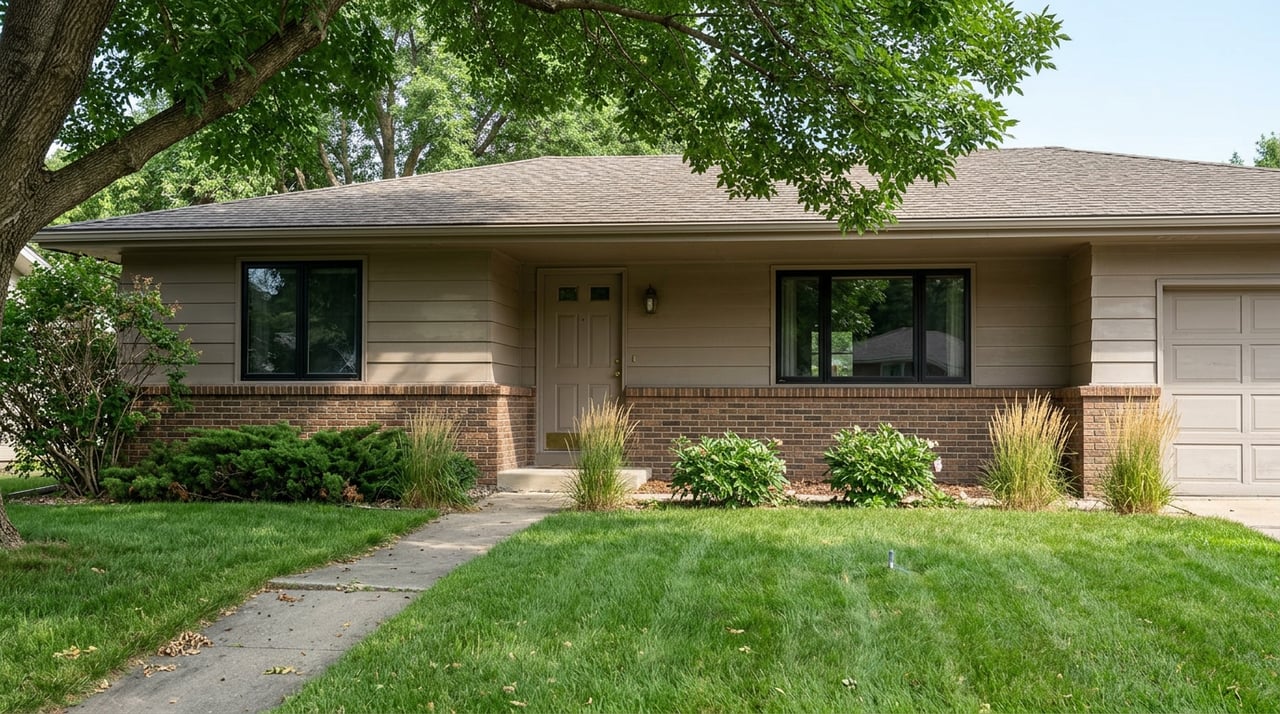
A year ago, a Littleton seller whose 1962 rancher in Arapahoe Hills still had its original galvanized supply lines could often get away with skipping a pre-listing check. Homes were moving in 12 days with enough competing offers that a rough sewer scope or an outdated electrical panel got absorbed into the deal, not renegotiated out of it. That math has changed. Over the three months ending May 2026, the typical Littleton home sat on the market 18 days and drew about two offers, not the stack of backup bids that defined the tighter market a year earlier. A buyer with more time to compare houses and fewer rivals bidding against them is a buyer with room to ask for a credit, a repair, or a price cut when the inspection turns up something the seller already knew about.
That shift matters most in the neighborhoods where Littleton's age actually lives: the pre-war core downtown, the mid-century pockets built in the 1950s and 60s, and the ranch-era subdivisions that filled in through the 1970s. A sewer camera inspection in the area typically runs somewhere between $95 and $350. Left undiscovered until a buyer's inspector finds it, the same problem averages $7,500 to $8,500 to fix. That gap was always real. It just used to get papered over by a market that forgave almost anything. It doesn't anymore.
The neighborhoods carry different decades, and different decades carry different systems
Littleton's housing stock did not arrive all at once, and that history is legible neighborhood by neighborhood. Old Town and Downtown Littleton hold the city's oldest bones, with Victorian-era and pre-World War II houses clustered around the original town grid and the Town Hall Arts Center. Arapahoe Hills, just outside that core, is a recognized pocket of 1950s and 60s mid-century modern design, distinctive enough that it carries National Register of Historic Places status. Aberdeen Village, Broadmoor, and Bow Mar filled in across the same postwar decades with ranch-style construction, Bow Mar's homes spanning roughly 1950 to 2009 around its namesake lake. Grant Ranch, by contrast, is late 1990s to early 2000s construction, which puts it in an entirely different maintenance category than its older neighbors.
That range matters because the systems inside a house track its build decade closely. Supply piping in homes built before 1970 across the Denver area was standard-issue galvanized steel, which corrodes from the inside and restricts water flow long before a homeowner notices anything beyond low pressure. Homes built roughly between 1975 and 1995 sometimes carry polybutylene piping instead, a gray plastic material that degrades in its own way. Sewer laterals tell a parallel story. Established Littleton neighborhoods near downtown and along the South Platte River corridor were built out in the 1950s through 1970s with clay tile or cast-iron sewer lines that are now at or past their design life, and root intrusion from the large cottonwoods and ash trees common on those older streets accelerates the wear.
Here is the rough map, useful less as trivia than as a checklist for what to ask a plumber or inspector to look at first:
| Neighborhood or era | Typical build decades | System most likely to need a look |
|---|---|---|
| Old Town / Downtown Littleton | Pre-WWII, early 1900s | Structural, original foundations, aging wiring |
| Arapahoe Hills | 1950s to 1960s | Galvanized supply pipe, original sewer laterals |
| Aberdeen Village, Broadmoor, Bow Mar | 1950s to 1970s | Galvanized or early polybutylene pipe, clay/cast-iron laterals, legacy panels |
| South Platte River corridor subdivisions | 1950s to 1970s | Clay tile or cast-iron sewer laterals |
| Grant Ranch | Late 1990s to early 2000s | Routine maintenance, not legacy systems |
A seller in Grant Ranch is working with a fundamentally different risk profile than one in Aberdeen Village, and pricing an inspection budget accordingly saves both money and surprises.
What a buyer's inspector actually finds in these houses
Two systems account for most of the friction in Littleton's older sales: the sewer lateral and the electrical panel.
On the sewer side, a video camera inspection is the only way to see what a standard walkthrough inspection cannot. It identifies root intrusion, offsets from shifting soil, and the slow collapse of clay or cast-iron sections that still drain fine on inspection day but are living on borrowed time. If a problem turns up, the fix ranges from trenchless lining, which runs roughly $60 to $250 per linear foot depending on the method and pipe condition, up to a full replacement averaging $7,500 to $8,500 when the line has to be dug and redone.
On the electrical side, the panel to watch for is Federal Pacific Electric, known by its Stab-Lok breaker design, along with the similarly flagged Zinsco brand. Both were common in homes built from the 1950s through the 1970s and both are known for breakers that fail to trip when they should, which lets a fault keep drawing current instead of shutting off. The panels are not illegal to keep, but many insurance carriers decline to write coverage on a home that still has one, and a full replacement in the Denver metro area typically runs $6,000 to $10,000. A seller who finds out about this from their own electrician before listing has options: replace it, price around it, or disclose it clearly. A seller who finds out about it from the buyer's inspector is negotiating from a weaker position, especially with 18 days on market and a buyer who has time to think it over.
The disclosure rule that removes the option to wait and see
Colorado does not require a specific disclosure form by statute, but nearly every residential transaction uses the Seller's Property Disclosure promulgated by the Colorado Real Estate Commission, and it is built around a phrase worth understanding before listing: current actual knowledge. The seller is only on the hook for what they actually know, not for defects a more thorough inspection might have caught. That sounds protective, and for sellers who genuinely do not know about a problem, it is. But the form also closes an obvious loophole. If a defect was ever present, even if it was already repaired, the seller has to disclose it. Fixing a sewer collapse in 2019 does not mean a seller can leave that box unchecked in 2026.
The Colorado Supreme Court gave this teeth in Cohen v. Vivian, a case where developers knew about expansive soil conditions affecting a subdivision's foundations and said nothing. The homes later sank, tilted, and cracked, and the court found the sellers negligent for failing to disclose a latent defect they knew about beforehand. An as-is clause in a contract does not undo that duty. It shifts the risk of what neither party knew about, not the seller's obligation to speak up about what they did know.
For a Littleton seller sitting on a house with a documented history of sewer backups or a panel an electrician already flagged years ago, this is not really a choice between disclosing and not disclosing. It is a choice between disclosing it on their own terms, with a plan and maybe a repair already in hand, or having it surface at the worst possible moment in a slower market with a buyer who has more leverage to walk.
The arithmetic, restated
A sewer scope costs less than a month of an average listing's carrying costs. A pre-listing electrical check costs less than a single price reduction. Both are small next to what a buyer's inspector finding the same issue can cost in repair credits, walked deals, or a disclosure dispute after closing. In a market where the typical Littleton home takes 18 days instead of 12 and draws two offers instead of a stack of them, that math is no longer something a seller can outrun with speed. It has to be handled before the sign goes in the yard.
FAQ
Does every older Littleton home need a sewer scope before listing? Not every one, but any home in a neighborhood built before roughly 1980, particularly those near downtown or along the South Platte River corridor, is a strong candidate given how common original clay tile and cast-iron laterals still are in that housing stock.
If I already repaired a sewer or panel issue years ago, do I still have to mention it? Under the standard Colorado disclosure form, yes. The form asks whether a problem has ever existed, not just whether it currently exists, so a completed repair still needs to be disclosed along with the fact that it was fixed.
Is a Federal Pacific panel a reason a sale could fall through? It can be, mainly through insurance. Some carriers will decline to write a policy on a home with one, which can complicate a buyer's ability to close, so identifying it early gives everyone time to plan around it instead of discovering it during underwriting.
If you are weighing when to list an older Littleton home, or want a read on what your specific neighborhood and build decade might mean for your sale, the team at Vara: The Real Estate Collective can walk through your options and connect you with the local inspectors who already know this housing stock. Let's Connect.